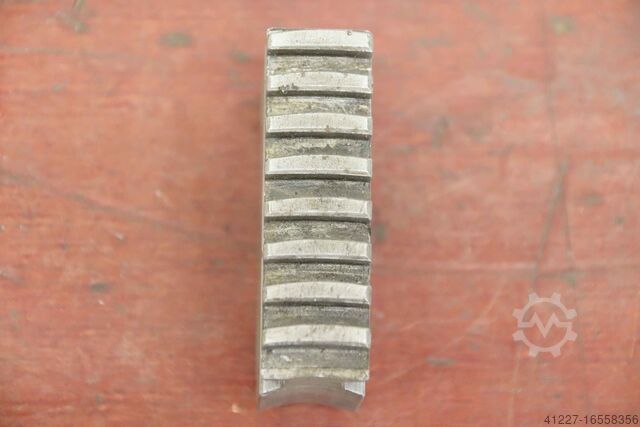
Used Jaw Crusher for sale (3,533)
Sort results
- Lowest price Highest price
- Newest listings Oldest listings
- Shortest distance Farthest distance
- Newest year of manufacture Oldest year of manufacture
- Latest update Oldest update
- Manufacturer A to Z Manufacturer Z to A
- Relevance
- Lowest price
- Price
- Highest price
- Price
- Newest listings
- Release date
- Oldest listings
- Release date
- Shortest distance
- Distance
- Farthest distance
- Distance
- Newest year of manufacture
- Year of construction
- Oldest year of manufacture
- Year of construction
- Latest update
- Update
- Oldest update
- Update
- Manufacturer A to Z
- Manufacturer
- Manufacturer Z to A
- Manufacturer
- designation from A to Z
- Description
- designation from Z to A
- Description
- Model from A to Z
- Model
- Model from Z to A
- Model
- Lowest reference
- Ref.No.
- Highest reference
- Ref.No.
- Shortest runtime
- Runtime
- Longest duration
- Runtime
- Relevance
- Relevance
Listing
Turkey
3,193 km
Crushing equipment
FABO Fixed Crusher200-350 T/H
Call
Condition: new, functionality: fully functional, fuel type: electric, Year of construction: 2026, *All of our products are made with care and covered for 1 year warranty!
*Installation and Operator Training FREE
FABO manufactures and installs stationary type stone screening & washing plants according to customer requirements. Production capacity of our stationary plants differs from 100 to 1000 ton per hour.
Hnedpsx Dhbuefx Afnoh
200-350 Tons/hour capacity of Washing and Screening Plant:
- Riverstone Feeding Bunker
- 1300x4000x2 Decks Vibrating Screen
- 2000x6000x4 Decks Vibrating Screen with washing system
- 1500x4000mm Dewatering screen with Hydrocyclone
- Conveyor Belt System
- Control Panel and Automation System
FOR FURTHER INFORMATION PLEASE FEEL FREE TO CALL US!!!
Listing
Zheng Zhou Shi
8,710 km
Crushing equipment
Hammer crusher /Hammer milllimestone, coal gangue,concrete crusher
Call
Condition: new, power: 55 kW (74.78 HP), Year of construction: 2025, A hammer crusher is a machine that uses high-speed rotating hammers to crush and break materials into smaller pieces. It is commonly used in various industries, including mining, cement, construction, metallurgy, and chemical processing. The basic principle of a hammer crusher involves a central rotor with hammers or blades that rotate and impact the material being crushed against a hard surface.
Here are the key features and components of a typical hammer crusher:
1. Rotor:
- The rotor is a central component of the hammer crusher. It usually consists of a shaft with multiple discs or hammers attached.
- The rotor's rotation causes the hammers to swing outward, impacting the material.
2. Hammers:
- Hammers are the striking or crushing elements attached to the rotor. They can be fixed or pivotally attached.
Hsdpfx Aoq I Nxdofnenh
- The material is crushed as the hammers impact it, generating kinetic energy.
3. Casing or Housing:
- The casing or housing encloses the rotor and hammers, providing structural support and safety.
- It also serves to contain the crushed material and direct it to the desired discharge point.
4. Grate Bars or Screens:
- Positioned at the bottom of the crusher casing, grate bars or screens control the size of the crushed material by allowing smaller particles to pass through while keeping larger ones inside for further crushing.
5. Impact Plate:
- Located near the bottom of the crusher, the impact plate absorbs the impact energy generated by the hammers and prevents excessive wear on the casing.
6. Drive System:
- The hammer crusher is powered by a motor connected to the rotor through a drive belt or coupling.
- The motor provides the necessary power to rotate the rotor, enabling the hammers to crush the material.
7. Adjustable Discharge:
- Some hammer crushers feature an adjustable discharge, allowing users to control the size of the crushed material by adjusting the gap between the impact plate and the hammers.
8. Applications:
- Hammer crushers are used for crushing a variety of materials, including coal, limestone, gypsum, aggregates, and various minerals.
- They are commonly employed in the mining industry for primary and secondary crushing of ore.
- In the cement industry, hammer crushers are used to crush limestone and other materials before they are mixed into the raw meal.
9. Maintenance and Safety:
- Regular maintenance is essential to ensure the efficient operation of a hammer crusher. This includes checking and replacing worn hammers, inspecting the rotor, and lubricating moving parts.
- Safety features, such as access doors and safety guards, are typically incorporated to prevent accidents during operation and maintenance.
Hammer crushers are versatile machines that can handle a wide range of materials and are suitable for both primary and secondary crushing. The size and design of the crusher depend on the specific application and material characteristics. Operators should follow manufacturer guidelines and safety precautions to ensure optimal performance and safety.
Listing
Zheng Zhou Shi
8,710 km
Crushing equipment
MINGYUAN Double rotor hammer crusherDouble stage hammer crusher
Call
Condition: new, power: 44 kW (59.82 HP), Year of construction: 2025, A double rotor hammer crusher is a type of crusher in which two rotors are mounted on a single shaft, combined to form a spinning rotor. The double rotor arrangement enhances the crushing capabilities and provides a more efficient and reliable crusher design compared to single rotor crushers.
Here are some key features and aspects of a double rotor hammer crusher:
1. Two Rotors: As the name suggests, the crusher has two rotors that rotate in opposite directions on a common shaft. This dual rotor configuration allows for increased impact and crushing power.
2. High Capacity: The dual rotor design enables the crusher to handle larger feed sizes and higher capacity compared to single rotor crushers. It is suitable for crushing materials with high hardness and large sizes.
3. Versatility: Double rotor hammer crushers are versatile and can be used in various applications, including the reduction of limestone, gypsum, coal, and other similar materials in the mining, cement, and building materials industries.
4. Impact Crushing: The primary mechanism of crushing in a double rotor hammer crusher is through the impact of the hammers against the material. The material is fed into the crusher, and the high-speed rotating hammers impact and shatter the particles.
5. Adjustable Gap Settings: These crushers often have adjustable gap settings between the rotors and the impact bars, allowing control over the final particle size.
6. Durability: The robust design of the double rotor hammer crusher makes it durable and capable of handling tough materials and continuous operation.
7. Reduced Wear: The dual rotor arrangement can help distribute wear more evenly across the hammers and other wear parts, potentially extending the overall lifespan of the crusher.
Hedpsq Nf Enjfx Afnenh
8. Ease of Maintenance: Some double rotor hammer crushers are designed with features that make maintenance and replacement of wear parts more accessible, reducing downtime.
It's important to note that specific features and design aspects may vary among different models and manufacturers of double rotor hammer crushers. If you are considering using or purchasing one, it's recommended to consult the manufacturer's specifications and guidelines for proper operation and maintenance.

Get information now
+44 20 806 810 84
+44 20 806 810 84
List now
*per listing / month
Listing
Zheng Zhou Shi
8,710 km
Crushing equipment
Quarry crusher, Hard stone cone crusherConcrete & stone crusher, mobile crusher
Call
Condition: new, functionality: fully functional, Year of construction: 2025, A compound cone crusher is a type of crusher used in mining and aggregate industries to break down rock into smaller pieces. It combines the advantages of both traditional cone crushers and modern technology to achieve higher efficiency, better product shape, and reliable operation. Here are its key features, working principles, and typical usages:
### Key Features:
1. Combination of Crushing Technologies:
- Integrates both spring and hydraulic cone crushers to offer improved performance.
2. High Crushing Ratio:
- Capable of crushing materials into fine and uniform sizes with high reduction ratios.
3. Durability:
- Built with robust materials and components for long-lasting operation.
4. Adjustable Settings:
- Allows for easy adjustment of the crusher settings to control the size of the output material.
5. Efficient Crushing Chamber:
- Designed to minimize material clogging and ensure continuous operation.
### Working Principles:
1. Material Feeding:
- Raw material is fed into the crusher through a hopper.
2. Crushing Process:
- The material enters the crushing chamber, where it is crushed between a fixed cone (outer shell) and a moving cone (inner shell).
- The moving cone is supported and driven by an eccentric shaft, which rotates and gyrates to crush the material against the fixed cone.
3. Adjustment Mechanism:
- The gap between the moving cone and the fixed cone can be adjusted to determine the size of the output material.
4. Discharge:
- Once crushed, the material exits the crusher through the bottom discharge opening.
### Typical Usages:
1. Mining Industry:
- Used for crushing various kinds of ores and rocks, particularly in secondary and tertiary crushing stages.
2. Aggregate Production:
- Ideal for producing gravel, sand, and crushed stone for construction and infrastructure projects.
Hedpfx Afetxhybjnenh
3. Recycling:
- Utilized for crushing construction waste and recycling materials to create reusable aggregate.
4. Construction Industry:
- Applied in producing concrete and asphalt aggregates, road base, and other construction materials.
Types of Cone Crushers
Standard Cone Crusher: Suitable for medium crushing tasks.
Short Head Cone Crusher: Used for fine crushing applications.
Hydraulic Cone Crusher: Equipped with hydraulic systems for improved operation.
Multi-Cylinder Hydraulic Cone Crusher: Provides better control and higher productivity.
Spring Cone Crusher: Uses springs to protect the machine from overloading.
Applications of Cone Crushers
Mining: Crushing of ores for further processing.
Construction: Producing aggregates for roads, bridges, and buildings.
Quarrying: Breaking down rocks for use in gravel or crushed stone products.
Recycling: Processing of demolition debris and concrete.
In summary, a compound cone crusher is a highly efficient, versatile, and durable piece of equipment ideal for various crushing applications in the mining, aggregate, recycling, and construction industries.
Listing
Zheng Zhou Shi
8,710 km
Crushing equipment
Mingyuan Stone & rock crusherImpact crusher for sand gravel crushing
Call
Condition: new, power: 75 kW (101.97 HP), Year of construction: 2025, An impact crusher is a machine that uses striking as opposed to pressure to reduce the size of a material. Impact crushers are versatile and widely used in various industries for the crushing of hard, abrasive materials. They operate by applying force on the material to be crushed, breaking it into smaller pieces. Here is a general introduction to impact crushers:
The impact crusher is a versatile machine used for various applications in construction, mining, and recycling industries. Below are some of the key applications of an impact crusher:
1. Primary and Secondary Crushing
Impact crushers are commonly used in both primary and secondary crushing stages. In primary crushing, they break large rocks into smaller, more manageable sizes, and in secondary crushing, they refine the material further into smaller grades.
2. Production of Aggregates
Impact crushers are widely used in the production of aggregates for construction. They are effective at producing a wide range of materials, including:
Crushed stone for road construction.
Sand for concrete and asphalt production.
Gravel for general construction and drainage.
3. Recycling
One of the most significant applications of impact crushers is in the recycling industry, especially for processing construction and demolition (C&D) waste, which includes materials like concrete, brick, and asphalt. The crushers help convert waste into usable products such as:
Recycled concrete aggregates (RCA).
Hjdpjv E Ddljfx Afnonh
Asphalt.
Recycled sand and gravel.
4. Mining Industry
Impact crushers are used in the mining industry to process ore materials. These crushers help break down large rocks and ores into smaller pieces, making them easier to process for extraction of valuable minerals like gold, copper, and other metals.
5. Production of Manufactured Sand
In the production of manufactured sand for concrete, impact crushers are used to break down larger rocks into fine particles, which are then used as an alternative to natural sand. This is especially useful in areas where natural sand is scarce or environmentally protected.
6. Construction and Road Building
Impact crushers are integral in the production of materials for road construction, such as base and sub-base materials. These materials are crucial for the stability and durability of roads, highways, and foundations.
7. Industrial Applications
Impact crushers are also used in various other industrial applications, such as:
Cement production: Crushing limestone and other materials for cement manufacturing.
Glass recycling: Breaking glass waste into smaller pieces for recycling.
8. Demolition and Dismantling
Impact crushers are used in demolition projects where buildings or structures need to be demolished and the materials crushed for reuse or disposal. They help reduce the size of debris like concrete, asphalt, and bricks into smaller, manageable pieces.
Discover more used machines
Listing
Zheng Zhou Shi
8,710 km
Crushing equipment
Single & Multi-Cylinder cone crusherMultiple cylinder hydraulic cone crusher
Call
Condition: new, power: 250 kW (339.91 HP), Year of construction: 2025, The Multiple Cylinder Hydraulic Cone Crusher is an advanced type of cone crusher designed to provide higher productivity and better crushing performance than traditional single-cylinder cone crushers. Here are some key features and information about multiple cylinder hydraulic cone crushers:
1. Structure and Working Principle:
- Multiple cylinder hydraulic cone crushers typically have three or more cylinders.
- The crushing chamber is formed between the mantle (outer fixed cone) and the concave (inner moving cone).
- The cylinders control the movement of the inner cone, providing a highly efficient and uniform crushing process.
2. Hydraulic System:
- Each cylinder is equipped with its hydraulic system, allowing for independent control of the crushing chamber.
- The hydraulic system is used for adjusting the discharge opening size, controlling the tramp iron release, and providing overload protection.
3. Adjustable Discharge Opening:
- The discharge opening can be easily adjusted to control the size of the crushed product.
4. Automation and Control System:
- Multiple cylinder hydraulic cone crushers often feature advanced automation and control systems.
- These systems can include programmable logic controllers (PLCs) and human-machine interfaces (HMIs) for convenient operation and monitoring.
5. Application:
- Multiple cylinder hydraulic cone crushers are suitable for crushing hard and medium-hard materials in industries such as mining, metallurgy, building materials, and road construction.
- They are particularly effective for crushing materials with high hardness and abrasive index.
6. Advantages:
- Higher crushing efficiency and throughput compared to single-cylinder cone crushers.
- Better shape of the crushed product due to the uniform crushing action.
- Improved reliability and maintenance convenience.
- Enhanced safety features with the hydraulic system providing overload protection.
7. Disadvantages:
- Potentially higher initial cost compared to single-cylinder cone crushers.
- May require more complex maintenance and repairs.
8. Models and Specifications:
Hsdpfxeq Nd Rbo Afnjnh
- Multiple cylinder hydraulic cone crushers come in various models, such as HPT series, HP series, and others, each with different specifications.
9. Manufacturers:
- Various manufacturers produce multiple cylinder hydraulic cone crushers. Well-known manufacturers often provide reliable and high-quality equipment.
When considering a multiple cylinder hydraulic cone crusher, it's essential to assess your specific needs, compare features of different models, and consider factors such as capacity, feed size, and required end product specifications. Additionally, check the reputation and customer feedback regarding the manufacturer and model you are interested in.
Listing
Zheng Zhou Shi
8,710 km
Crushing equipment
Double roller crusher /roller sand makerStationary&portable sand crushing plant
Call
Condition: new, functionality: fully functional, power: 30 kW (40.79 HP), Year of construction: 2025, A double roller crusher for sand making, also known as a roller sand making machine, is a processing machine that utilizes two rollers to crush and reshape coarse-grained materials such as rock, stone, and ore into finer particles. This type of equipment is commonly used in the production of construction aggregates, artificial sand, and other materials used in various industries.
Here are key features and aspects of a double roller crusher for sand making:
1. Double Roller Design:
- The crusher has two parallel, counter-rotating rollers that exert pressure on the material. The gap between the rollers can be adjusted to control the size of the crushed particles.
2. Crushing Mechanism:
- The material is fed between the two rollers, and as they rotate, the material is drawn into the crushing zone. The rollers compress and crush the material, reducing it to the desired size.
3. Material Feed and Discharge:
- The material is typically fed into the top of the crusher and is crushed between the rollers. The crushed material exits at the bottom of the machine.
4. Adjustable Gap Settings:
- The gap between the rollers is adjustable, allowing for control over the final size of the crushed material. This feature is essential for producing materials of different particle sizes.
5. Roller Surface Design:
- The surface of the rollers may be smooth or have corrugations to enhance the gripping and crushing action. The choice of roller surface design depends on the characteristics of the material being processed.
6. High Efficiency:
- Double roller crushers are known for their high efficiency in crushing and shaping materials. The dual roller design provides a more consistent and controlled process compared to single roller crushers.
7. Versatility:
- These crushers are versatile and can be used for various materials, including hard and soft rocks, ores, and other aggregates. They are particularly suitable for producing artificial sand.
8. Dust and Noise Control:
- Some double roller crushers are equipped with features to control dust emissions and reduce noise during operation, improving the working environment.
9. Application in Sand Making:
- Double roller crushers for sand making are commonly used to produce fine aggregates and artificial sand. They are employed in the production of high-quality sand for construction and other applications.
10. Maintenance and Safety:
- Regular maintenance is essential for optimal performance. Safety features, such as emergency stops and safety guards, are often incorporated to ensure safe operation.
11. Motor and Drive System:
- A powerful motor and a reliable drive system are essential components to drive the rotation of the rollers and ensure consistent and efficient crushing.
Hodoq Ngamspfx Afnonh
The specific design and features of double roller crushers for sand making can vary among different models and manufacturers. When selecting or using this type of equipment, it's important to refer to the manufacturer's guidelines and specifications for proper operation and maintenance.
Listing
Zheng Zhou Shi
8,710 km
Crushing equipment
Stone crusher /rock crushing equipmentFixed & Mobile stone crushing plant
Call
Condition: new, Year of construction: 2025, Introduction Of Jaw Crusher Plant
The capacity vary according customer request. And in order to meet the different demands of customers, the production line can equip with cone crusher, dust removal equipment and other equipment. It is suitable for the materials like hard limestone, granite,basalt, pebble, metallurgy slag and artificial sand making work. It is widely used in the industries of hydroelectric, building materials, highway, and urban construction. And according to different technological requirement, various types of equipment can be combined to meet the demands of different customers.
Product Advantages of Stone Crusher Machine Plant
1.High reliability, good stability
2.Convenient maintenance, easy operation
3.Low operation costs, wide application range
4.Laminating crushing makes good discharging grain shape
We also provide other stone crushing solutions like
1. Vibrating feeder + Jaw crusher + Fine jaw crusher + Vibrating screen
2. Vibrating feeder + Jaw crusher + Impact crusher + Vibrating screen
3. Vibrating feeder + Heavy hammer crusher + Vibrating screen
4. Sand Production Line
5. Gravel / Aggregate production line
A stone crushing plant for sand and aggregate production involves several stages and equipment. Here's an overview of the process and the main components involved:
Process Overview
1. Primary Crushing: Large stones from the quarry are fed into a primary crusher, typically a jaw crusher, which reduces them to smaller, manageable sizes.
2. Secondary Crushing: The output from the primary crusher is further reduced in size by a secondary crusher, usually a cone crusher or impact crusher.
3. Screening: The crushed material is separated into different size fractions using vibrating screens. Oversized material is returned to the crushers for further reduction.
4. Sand Making: For producing sand, the material might be passed through a sand making machine, like a vertical shaft impact crusher, to achieve the desired shape and size.
5. Washing: The final product is often washed to remove impurities and improve the quality of the aggregate.
6. Stockpiling: The finished product is stored in stockpiles before being transported to customers.
Hodpfx Aeq Nyy Eofnsnh
Main Components of stone crushing plant
1. Jaw Crusher: Used for primary crushing of large stones.
2. Cone Crusher or Impact Crusher: Used for secondary crushing to produce finer aggregates.
3. Vibrating Screen: Separates the crushed material into different size fractions.
4. Sand Making Machine: Special equipment for producing sand.
5. Belt Conveyors: Transport materials between different stages of the process.
6. Vibrating Feeder: Feeds raw material into the crushers evenly and continuously.
7. Sand Washer: Cleans the sand by removing impurities.
8. Control System: Manages the entire process, ensuring efficient and safe operation.
Implementing a well-designed stone crushing plant can significantly increase production efficiency and produce high-quality sand and aggregate.
Listing
Zheng Zhou Shi
8,710 km
Cralwer / Track Mounted Mobile Crusher
Crawler / Track Mounted Mobile Crusher200 t/h for sand gravel crushing plant
Call
Condition: new, functionality: fully functional, power: 450 kW (611.83 HP), Year of construction: 2025, ### Crawler Mobile Crusher / Track-Mounted Mobile Stone Crusher: Introduction and Application
Introduction:
Crawler mobile crushers, also known as track-mounted mobile crushers, are versatile and highly efficient machines designed for crushing various materials on-site. Unlike traditional fixed crushers, these mobile units are mounted on tracks, allowing them to navigate rough terrains and remote locations with ease.
These crushers integrate feeding, crushing, screening, and conveying processes into one system, providing flexibility and reducing the need for multiple pieces of equipment. Powered by diesel engines, they offer mobility, reduced setup time, and a compact design that simplifies transportation.
Key Features:
1. Mobility: Track-mounted design ensures ease of movement across different sites.
2. Versatility: Suitable for crushing various types of materials, including rocks, ores, and demolition waste.
3. Efficiency: High-performance crushing and screening capabilities.
4. Eco-friendly: Equipped with dust suppression and noise reduction systems.
5. Automation: Advanced control systems for smooth operation and minimal manual intervention.
Applications:
Hodoq Nfvuopfx Afnsnh
1. Quarrying and Mining: Ideal for crushing hard and abrasive stones such as granite, basalt, and limestone. They efficiently process raw materials for construction aggregates and mining operations.
2. Construction and Demolition: Perfect for on-site crushing of demolition waste, including concrete, bricks, and asphalt. This reduces the volume of waste and allows for recycling of materials, contributing to sustainable construction practices.
3. Infrastructure Projects: Widely used in road construction, railway ballast production, and infrastructure development. Their mobility ensures they can operate close to the construction site, reducing material transportation costs.
4. Recycling: Effective in recycling operations, particularly for crushing and processing concrete and asphalt debris. This contributes to reducing landfill use and conserving natural resources.
5. Aggregate Production: Essential for producing high-quality aggregates used in construction projects. Their capability to produce different sizes of aggregates meets various industry standards and requirements.
Conclusion:
Crawler mobile crushers are indispensable in modern construction and mining operations. Their mobility, efficiency, and versatility make them a valuable asset for industries requiring on-site crushing and screening. By reducing setup time and transportation costs, they enhance operational efficiency and contribute to eco-friendly practices through material recycling.
Listing
Zheng Zhou Shi
8,710 km
Crushing equipment
Henan Mingyuan HSI Impact crusherStone crushing plant for sand aggregate
Call
Condition: new, Year of construction: 2025, A stone production plant for sand and aggregate is designed to produce different types of materials used in construction, such as sand, gravel, and crushed stone. Here’s a detailed layout of a typical stone production plant:
Process Overview
Feeding: Raw materials (large stones) are fed into the plant.
Primary Crushing: Large stones are reduced in size by a primary crusher.
Secondary Crushing: Further reduction of stone size by secondary crushers.
Screening: Separation of crushed materials into different sizes.
Sand Making: Processing certain fractions to create sand.
Washing: Cleaning of aggregates and sand to remove impurities.
Stockpiling: Storing the final product for shipping.
Main Components
Raw Material Storage: Storage area for raw stones.
Vibrating Feeder: Feeds stones into crushers consistently and evenly.
Primary Crusher (Jaw Crusher): Breaks down large stones into smaller pieces.
Secondary Crusher (Cone Crusher/Impact Crusher): Further reduces stone size.
Vibrating Screen: Classifies materials into different size fractions.
Sand Making Machine (Vertical Shaft Impact Crusher): Converts some fractions into sand.
Sand Washer: Cleans sand to remove unwanted particles.
Hedpfx Asq Ny Sajfnjnh
Belt Conveyors: Transports materials between different processing stages.
Control System: Monitors and controls the entire production process.
Dust Collection System: Reduces dust emissions for environmental compliance.
Applications of Stone Production Plant
Construction Industry: Essential for concrete, road construction, and building foundations.
Landscaping: Used for decorative aggregates, pathways, and erosion control.
Infrastructure Development: Supports drainage systems and flood control structures.
Manufacturing: Provides materials for glass, cement, and steel production.
Agriculture: Neutralizes acidic soils and serves as livestock feed.
Environmental: Used in water treatment and land reclamation projects.
Residential Applications: Ideal for driveways, walkways, and patios.
Recreational Facilities: Supplies sand for golf courses and playgrounds.
Energy Sector: Supports oil and gas drilling and renewable energy projects.
Art and Design: Utilized in sculptures and architectural features.
Listing
Zheng Zhou Shi
8,710 km
Crushing equipment
HSI impact crusher & rock crusherImpact crusher for sand gravel crushing
Call
Condition: new, power: 75 kW (101.97 HP), Year of construction: 2025, An impact crusher is a machine that uses striking as opposed to pressure to reduce the size of a material. Impact crushers are versatile and widely used in various industries for the crushing of hard, abrasive materials. They operate by applying force on the material to be crushed, breaking it into smaller pieces. Here is a general introduction to impact crushers:
The impact crusher is a versatile machine used for various applications in construction, mining, and recycling industries. Below are some of the key applications of an impact crusher:
1. Primary and Secondary Crushing
Impact crushers are commonly used in both primary and secondary crushing stages. In primary crushing, they break large rocks into smaller, more manageable sizes, and in secondary crushing, they refine the material further into smaller grades.
2. Production of Aggregates
Impact crushers are widely used in the production of aggregates for construction. They are effective at producing a wide range of materials, including:
Crushed stone for road construction.
Sand for concrete and asphalt production.
Gravel for general construction and drainage.
3. Recycling
One of the most significant applications of impact crushers is in the recycling industry, especially for processing construction and demolition (C&D) waste, which includes materials like concrete, brick, and asphalt. The crushers help convert waste into usable products such as:
Recycled concrete aggregates (RCA).
Hodpjq I N Iqefx Afnenh
Asphalt.
Recycled sand and gravel.
4. Mining Industry
Impact crushers are used in the mining industry to process ore materials. These crushers help break down large rocks and ores into smaller pieces, making them easier to process for extraction of valuable minerals like gold, copper, and other metals.
5. Production of Manufactured Sand
In the production of manufactured sand for concrete, impact crushers are used to break down larger rocks into fine particles, which are then used as an alternative to natural sand. This is especially useful in areas where natural sand is scarce or environmentally protected.
6. Construction and Road Building
Impact crushers are integral in the production of materials for road construction, such as base and sub-base materials. These materials are crucial for the stability and durability of roads, highways, and foundations.
7. Industrial Applications
Impact crushers are also used in various other industrial applications, such as:
Cement production: Crushing limestone and other materials for cement manufacturing.
Glass recycling: Breaking glass waste into smaller pieces for recycling.
8. Demolition and Dismantling
Impact crushers are used in demolition projects where buildings or structures need to be demolished and the materials crushed for reuse or disposal. They help reduce the size of debris like concrete, asphalt, and bricks into smaller, manageable pieces.
Listing
Zheng Zhou Shi
8,710 km
Crushing equipment
Symons cone crusher/mobile crusherSpring cone crusher PYB900, PYD900
Call
Condition: new, Year of construction: 2025, The PYB series spring cone crusher is a traditional cone crusher developed by introducing advanced technology from abroad. Here are some key features and information about the PYB spring cone crusher:
1. Structure and Working Principle:
- The crusher consists of an outer cone (mantle) and an inner cone (concave), with a crushing chamber in between.
- The outer cone is fixed, and the inner cone is eccentrically oscillated to crush the material.
2. Spring System:
- The crusher is equipped with a spring system to provide overload protection. When non-crushable materials enter the crushing chamber, the spring is compressed, allowing the material to pass through without causing damage to the crusher.
Hedpfx Afsq Nd Ndjnonh
3. Adjustable Discharge Opening:
- The discharge opening can be adjusted to control the size of the crushed product.
4. Application:
- PYB spring cone crushers are widely used in industries like metallurgy, construction, road building, chemistry, etc.
- They are suitable for crushing hard and medium-hard ores and rocks, such as iron ore, copper ore, limestone, quartz, granite, basalt, diabase.
5. Advantages:
- Overload protection through the spring system.
- Adjustable discharge opening allows for flexibility in the size of the crushed product.
- Simple structure and reliable performance.
6. Disadvantages:
- Compared to more modern cone crusher designs, the spring cone crusher may have limitations in terms of efficiency and energy consumption.
7. Maintenance:
- Regular maintenance is required to ensure optimal performance and longevity.
8. Model Names:
- Different models in the PYB series may have variations in specifications, such as PYB600, PYB900, PYB1200, etc., indicating the diameter of the cone.
9. Manufacturer:
- Various manufacturers produce PYB series spring cone crushers. It's important to choose a reputable manufacturer with a history of producing reliable and quality equipment.
Before selecting a crusher, it's advisable to consider the specific requirements of your project and compare the features of different models. Additionally, check the manufacturer's reputation and customer reviews to ensure the reliability and performance of the equipment.
Listing
Zheng Zhou Shi
8,710 km
Crushing equipment
Mobile stone crusher /Portable crusher50-350 t/h mobile stone crushing station
Call
Condition: new, power: 75 kW (101.97 HP), Year of construction: 2025, A mobile jaw crusher is a type of crushing machine that is equipped with a jaw crusher and is mobile in nature. This crusher is designed to be moved around and taken to various locations, especially those where processing materials are needed on-site. Mobile jaw crushers are widely used in industries such as mining, construction, and recycling for processing a variety of materials.
Here are the key features and components of a typical mobile jaw crusher:
Hnedpfx Afeq I N Atsneh
1. Jaw Crusher:
- The primary crushing unit of the mobile jaw crusher is the jaw crusher itself. It consists of a fixed jaw and a movable jaw, with the material being crushed between them.
2. Mobile Chassis:
- The crusher is mounted on a mobile chassis, which may have tracks for mobility or be wheeled for easy transport. The mobility of the chassis allows the crusher to be easily moved between different work sites.
3. Feeder:
- A vibrating feeder is typically included to feed the material into the jaw crusher. It ensures a consistent and controlled feed of the material to the crushing chamber.
4. Engine or Power Source:
- Mobile jaw crushers are powered by diesel engines or electric motors. The choice of power source depends on factors such as the availability of electricity and the need for mobility.
5. Control Panel:
- A control panel is provided for operators to manage and monitor the crusher's operation. It may include controls for starting and stopping the crusher, adjusting the discharge setting, and monitoring various parameters.
6. Hydraulic System:
- Mobile jaw crushers often feature a hydraulic system to adjust the crusher's settings. This includes the adjustment of the jaw crusher's CSS (Closed Side Setting), which influences the product size.
7. Conveyor Systems:
- Conveyors are used to transport crushed material from the jaw crusher to the next stages of the processing plant or for stockpiling. Some mobile jaw crushers have integrated conveyor systems.
8. Magnetic Separator (Optional):
- Some mobile jaw crushers come equipped with a magnetic separator to remove metal contaminants from the crushed material, preventing damage to downstream equipment.
9. Dust Suppression System (Optional):
- To control dust generated during the crushing process, some mobile jaw crushers may be equipped with dust suppression systems.
10. Remote Control (Optional):
- Remote control capabilities allow operators to control the crusher from a distance, enhancing safety and convenience.
11. Application:
- Mobile jaw crushers are used for primary crushing of various materials, including hard rock, construction and demolition waste, concrete, asphalt, and natural aggregates.
12. Versatility:
- Mobile jaw crushers are versatile and can be used in various applications. They are suitable for both recycling and quarrying operations, offering flexibility in processing different types of materials.
Mobile jaw crushers are beneficial for operations that require frequent relocation or for processing materials in remote locations. They provide a cost-effective solution for on-site crushing and are widely used in the construction and mining industries. Operators should follow safety guidelines and manufacturer recommendations for proper operation and maintenance.
Listing
Zheng Zhou Shi
8,710 km
Crushing equipment
Smooth & teeth double roller crusherRoller crusher for sand, coal crushing
Call
Condition: new, functionality: fully functional, Year of construction: 2025, A double teeth roller crusher is a type of roller crusher commonly used in industries that involve the crushing of various materials, such as mining, metallurgy, building materials, and chemical processing. This crusher is characterized by its two pairs of closely spaced, parallel, and oppositely rotating rolls with "teeth" or "knurling" on their surfaces. The teeth are designed to grab and crush the material, providing efficient and uniform size reduction.
Here are key features and aspects of double teeth roller crusher equipment:
1. Double Roller Design:
- The crusher features two parallel, counter-rotating rollers, each with a set of teeth or knurling on its surface. The dual roller design facilitates a consistent and efficient crushing process.
2. Teeth Configuration:
- The teeth on the rollers are designed to grip and crush the material. The arrangement and shape of the teeth may vary based on the specific application and the characteristics of the material being processed.
3. Adjustable Gap Settings:
- The gap between the rollers can usually be adjusted to control the size of the crushed particles. This feature allows for customization of the final product size.
Hedpfx Ajq Nga Ujfnenh
4. Material Feed and Discharge:
- Material is typically fed into the top of the crusher and is crushed between the rotating rollers. The crushed material is discharged at the bottom of the machine.
5. High Efficiency:
- Double teeth roller crushers are known for their high efficiency in crushing various materials. The dual roller design provides a more consistent and controlled process compared to single roller crushers.
6. Versatility:
- These crushers are versatile and can be used for various materials, including coal, limestone, slag, clay, and other similar materials.
7. Application in Mining and Processing:
- Double teeth roller crushers are commonly used in the mining industry for the crushing of minerals and ores. They are also utilized in other industries for size reduction and processing of materials.
8. Dust and Noise Control:
- Some double teeth roller crushers are equipped with features to control dust emissions and reduce noise during operation, improving the working environment.
9. High Torque and Power:
- A powerful motor and a robust drive system are essential components to drive the rotation of the rollers, providing the necessary torque and power for efficient crushing.
10. Maintenance and Safety:
- Regular maintenance is essential for optimal performance. Safety features, such as emergency stops and safety guards, are often incorporated to ensure safe operation.
11. Application in Size Reduction:
- Double teeth roller crushers are effective in size reduction and are suitable for applications where precise control over the final product size is crucial.
It's important to note that the specific design, features, and applications of double teeth roller crushers can vary among different models and manufacturers. When selecting or using this type of equipment, it's advisable to refer to the manufacturer's guidelines and specifications for proper operation and maintenance.
Listing
Zheng Zhou Shi
8,710 km
Crushing equipment
Mobile / Stationary stone crusher plantSand & aggregate production plant
Call
Condition: new, Year of construction: 2025, A sand aggregate production plant is a facility where various types of aggregates (such as sand, gravel, crushed stone, or recycled concrete) are produced for use in construction and other applications. These plants typically include various stages of processing, from raw material extraction to the final product.
Here are the key components and processes typically involved in a sand aggregate production plant:
1. Raw Material Extraction:
- Quarrying or Mining: Aggregates are often extracted from quarries, mines, or riverbeds. Depending on the type of aggregate, the extraction process may involve drilling, blasting, or dredging.
2. Primary Crushing:
- Jaw Crusher or Gyratory Crusher: The extracted raw material is usually transported to the plant and fed into a primary crusher, where large rocks are broken down into smaller pieces.
3. Secondary Crushing:
- Cone Crusher or Impact Crusher: The crushed material from the primary crusher may undergo further reduction in size through secondary crushing.
4. Screening:
- Vibrating Screens: After crushing, the material is often screened to separate different sizes of aggregates. This process ensures that the final product meets the required specifications.
5. Washing:
- Sand Washers: In some cases, especially for sand production, washing is done to remove impurities, clay, and fines from the aggregates, ensuring a cleaner and higher-quality product.
Hnjdpfx Afsq Ngb Djnsh
6. Grading and Sorting:
- Classifiers or Graders: After washing and screening, the aggregates may go through additional processes to separate them based on size or quality.
7. Stockpiling:
- Stockpiles: The final aggregates are usually stockpiled for storage before being transported to construction sites or other end-users.
8. Aggregate Storage and Handling:
- Storage Bins or Silos: Larger production plants may have storage facilities, such as bins or silos, to store different types and sizes of aggregates before distribution.
9. Quality Control:
- Laboratory Testing: Regular quality control testing is performed on aggregates to ensure they meet specifications for strength, size, gradation, and other properties.
10. Environmental Considerations:
- Water Management: Some plants incorporate water management systems to recycle and reuse water used in the washing process, minimizing environmental impact.
11. Transportation:
- Conveyors or Trucks: Aggregates are typically transported from the production plant to construction sites by conveyors, trucks, or other means.
Listing
Zheng Zhou Shi
8,710 km
Crushing equipment
Mingyuan stone crusher machinegravel & aggregate production equipment
Call
Condition: new, Year of construction: 2025, Gravel and aggregate production equipment is used to crush, screen, and process stones, rocks, and other materials for the construction industry. This equipment is essential in producing various types of aggregates, including crushed stone, gravel, sand, and recycled concrete, which are used in the construction of roads, buildings, bridges, and other infrastructure projects. Here are some common types of equipment used in gravel and aggregate production:
1. Jaw Crusher:
Hodpfx Afoq Nxz Dsnjnh
- Jaw crushers are primary crushers used to break down large rocks into smaller, more manageable pieces. They are essential for the initial stage of aggregate production.
2. Impact Crusher:
- Impact crushers are used to crush rocks and stones with the help of impact force. They are suitable for shaping and producing fine aggregates.
3. Cone Crusher:
- Cone crushers are often used for secondary and tertiary crushing in aggregate production. They produce well-shaped and finely graded aggregates.
4. Vertical Shaft Impact (VSI) Crusher:
- VSI crushers are designed for shaping and producing high-quality artificial sand. They are suitable for processing materials with high abrasiveness.
5. Screens:
- Vibrating screens are used to separate different sizes of aggregates. They classify the material based on particle size and ensure that the final products meet specified gradation requirements.
6. Scalping Screens:
- Scalping screens are used to remove oversized materials before they reach the primary crusher. This helps to optimize the crushing process and prevent damage to the equipment.
7. Washing Equipment:
- Washing equipment, such as sand screws or log washers, is used to remove impurities and fine particles from aggregates. This is particularly important for producing high-quality concrete sand.
8. Conveyors:
- Conveyors are used to transport materials between different stages of the crushing and screening process. They play a crucial role in enhancing efficiency in material handling.
9. Stackers and Reclaimers:
- Stackers are used to create stockpiles of processed aggregates, while reclaimers are used to retrieve the material from the stockpile. Both are essential for efficient material storage and handling.
10. Crushing Plants:
- Complete crushing plants include various types of crushers, screens, and conveyors integrated into a single system. These plants are designed to handle large volumes of material efficiently.
Listing
Zwevegem
844 km
Block – Bone Crusher Type KB428
LASKABlok-bottenbreker Type KB428
Call
Condition: used, all stainless steel
Hjdpfsyc Sihsx Afnenh
for product up to 530 x 530 mm
Dimension: (L x W x H): 950 x 1.450 x 1.900 mm
3 x 380V, 50Hz, 22kW
Listing
Tönisvorst
1,025 km
Three-jaw chuck
RÖHM315 mm
Call
Condition: excellent (used), Three-jaw chuck from Röhm
Diameter 315 mm
(28593) stock number
max. n1 min/2000
equipped with hard base jaws and screwed-on
Hnodpfx Afjvxz T Reneh
soft jaws.
Weight 42 kg
Listing
Tönisvorst
1,025 km
Four-jaw chuck
ArowaNr.8
Call
Condition: excellent (used), Four-jaw chuck
Arowa
Hnedevx Acyepfx Afneh
No.8
(28592)
Diameter 250 mm
Through hole 68 mm
Weight 20 kg
Listing
Hessisch Lichtenau
1,244 km
New precision lathe chuck, power chuck, high precision air chuck, precision chuck, 3-jaw.
KITAGAWAKPC63C100 EP
Call
Condition: used, New precision lathe chuck, precision chuck
3-jaw high precision power chuck
Hnsdpfx Asyif I Isfnoh
High Precision Air Chuck KITAGAWA KPC63C100 EP
3-jaw pneumatic precision chuck with integrated cylinder
Chuck No. L1208 - P - EP Year of manufacture: 2011
External diameter: 150 mm
External clamping range: approx. 3-135 mm
Internal clamping range: approx. 6-149 mm
Jaw stroke: Ø 2.5 mm
Max. clamping force: 11.6 kN
Repeatability: 0.0010 mm
Jaw mounting bolts: M5 x 16 mm, 4 units per jaw
Chuck mounting bolts: 6 units, M6 x 65 mm
Max. speed: 4000 rpm
- Unused, packed in original box
- Box only opened for photos
Weight (chuck): 6.3 kg
Weight with box: 8.5 kg
New, unused, as-new from stock
Suitable for DMG WASINO G series and many Japanese lathes
Listing
Voerde
1,030 km
Lump Breaker Crusher for filter cake
REWA / Lenze
Call
Condition: used, Used Crusher for Filter Cake / Lump Breaker
Drive: Lenze
Hnedpobpia Defx Afnsh
The crusher for filter cake or lump breaker consists of two horizontal rotating shafts.
Trust Seal
Dealers certified through Machineseeker

Listing
Germany
1,293 km
Mobile crushing plant / stone crusher
Constmach Mobile Crushing PlantMobile vertical shaft impact crushing
Call
Condition: new, Year of construction: 2025, functionality: fully functional, power: 390 kW (530.25 HP), fuel type: hybrid, color: other, Equipment: cabin, CONSTMACH V-80 mobile vertical shaft impact crusher is a fully equipped mobile sand production plant specially designed for producing high-quality fine aggregate and cubic-shaped sand. This plant delivers superior performance in 0–5 mm particle sizes thanks to the VSI 800 CR vertical shaft impact crusher technology developed with advanced engineering solutions. Its compact design, easy transportability, and high efficiency deliver excellent results, especially when processing rocks of varying hardness, such as granite, basalt, dolomite, gabbro, and limestone.
The V-80 can be fed with natural stones up to 40 mm in size after primary or secondary crushing. The plant provides a production capacity of 150 to 200 tons per hour, depending on the hardness of the stone. During production, three different fractions can be obtained simultaneously, in addition to material smaller than 5 mm. The hydraulic foot system, short assembly time, and PLC-based automation structure offer maximum ease of use for the operator. Furthermore, it guarantees long-lasting and reliable operation with Siemens – Schneider brand electronic components.
V-80 Mobile Vertical Shaft Crusher Technical Specifications
Production Capacity: 150-200 tph
Maximum Feed Size: 40 mm
Feed Height: 4.5 meters
Main Configuration: VSI Crusher + Vibrating Screen
Total Motor Power: 390 kW
Electric Generator Requirement: 700 kVA
Plant Weight: 40 tons
Plant Dimensions: 18.8 (L) x 3.65 (W) x 4.4 (H) meters
Chassis Type: Single chassis with wheels, equipped with hydraulic legs
Why Choose the V-80 Mobile Vertical Shaft Impact Crusher?
At CONSTMACH, we offer our customers maximum efficiency, low maintenance costs, and quick installation advantages in rock crushing and screening processes. The V-80 model provides flexibility and operational ease in the field with both its high production capacity and mobile design. Its compact chassis, which can be transported with just a tractor, allows for quick transitions between different construction sites. Moreover, it guarantees uninterrupted production in all conditions with its dust reduction system, remote control support, and optional diesel generator integration. With its durability, energy efficiency, and world-class engineering quality, the V-80 has become synonymous with reliability and performance in sand production.
What Do We Do at Constmach?
Constmach is a leading machine manufacturer serving the construction and mining industries with a wide range of products tailored to their needs. Our product portfolio includes concrete block making machines, stationary and mobile concrete plants, stone crushing machines, stone crushing and screening plants, sand washing machines, sand making machines, asphalt plants, conveyor belt systems, jaw crushers, and mobile crushing plants. With its high quality standards, innovative production approach, and customer-focused solutions, Constmach stands out as a reliable brand in both national and international markets. Our products continue to be the preferred choice of industry professionals due to their durability, efficiency, and long-lasting performance.
Information: The prices listed in the advertisement are shared based on current information. However, due to changes in market conditions and supply processes, our prices may vary from time to time. Therefore, we recommend requesting a quote from us for accurate pricing information.
Hedpfxoxqbgde Afnjnh
Listing
Babenhausen
1,245 km
Universak Crusher
MilbrandtBSM 3
Call
Condition: new, Year of construction: 2026, functionality: fully functional, machine/vehicle number: 2026, warranty duration: 12 months, input voltage: 400 V, DGUV certified until: 03/2028, total length: 810 mm, total width: 720 mm, total height: 1,610 mm, input frequency: 50 Hz, type of input current: three-phase, For all light / dark rest broths etc.
"The universal crusher"
stainless steel
Performance hrs / 1500 kg dry
With pouring ring
Screen 3/5/8 and 12 mm (included)
Connection 400V, 11 kW, 32A-CEE connector
Hedpfxsdg Hn Ue Afnjnh
Dimensions: 720 x 810 x 1610mm, WxDxH
Ejection height 495
Listing
Tönisvorst
1,025 km
Flat spiral base jaws
Call
Condition: excellent (used), 1 set of spiral base jaws (28539)
Dimensions, see photo
Hnjdpsud Sk Eofx Afnsh
Listing
Netherlands
1,005 km
PET bottles crusher
BOREMA Umwelttechnik AGR-1200F
Call
Year of construction: 2013, condition: used, We offer you a used PET bottle crusher of the manufacturer BOREMA, type R-1200 F, year of construction 2013, for residual emptying, deaeration and pre-compaction of the fed PET bottles, from 0.3 up to 2.5 l content. The machine has a chassis and can be moved into and out of the feed chute of your baler. The machine has a throughput capacity of approx. 85,000 bottles/h, corresponding to approx. 3t/h.
We have the following technical information:
Manufacturer: BOREMA Umwelttecjhnik AG
Type: R-1200 F (with trolley for retracting and extending)
Year of manufacture: 2013
Drive power: 11 kW
Hnsdpou Thpnjfx Afneh
Connected load: 15 kW
Rated current: 32 A
Back-up fuse: 40 A
Type of construction: Continuous system
Function: Double rotor press system
Rotor pretension pneumatic: approx. 16t
Overload protection: by anti-blocking system
Input material: PET disposable and returnable empty bottles 0.3 to 2.5 L capacity
Input material: HDPE bottles and canisters up to 3 l capacity
Throughput capacity: approx. 3 t/hour, corresponding to approx. 85,000 bottles/hour, depending on size
Required compressed air output: G1/2", 8 bar, 40 l/min.
Compression ratio: 1:3
Flange dimensions inside: 972 x 1220 mm
Feed opening: 565 x 1280mm
Weight: approx. 2500kg
Possible applications:
Due to the chassis, the PET flattener can be moved into the feed chute of your baler as required, thus ensuring residual emptying, venting and pre-compaction of the fed bottles and canisters. When the material is changed, the PET flattener is simply moved out of the feed chute again and paper, cardboard, film, etc. can now be pressed further without using the flattener.
Process of the BOREMA PET crusher:
The plastic packages are drawn in by two rotating shafts. One of the rotating shafts is pneumatically pretensioned by two air bellows and presses the PET bottles with 16 t of pressure against the second rotating shaft. In the process, the closed plastic bottle is squeezed together, caused to burst and vented. Residual liquids run out and the material falls into the baler in a precompressed state. When impurities are introduced, the pneumatically pre-tensioned shaft deflects to the side and the impurities are channeled through.
Significant advantages compared to conventional PET perforators with punching mandrels or knives:
The BOREMA process is much more efficient and less subject to wear than conventional PET perforators with punching mandrels or knives. The biggest advantage is that any foreign matter such as metal parts, stones, bottles with frozen contents and pieces of wood are passed through the pneumatically deflecting rotor shaft without stopping the operation of the system or causing any major damage. With conventional perforators, mandrels or blades sometimes break off or become so jammed with the interfering material that the plant has to be shut down and repaired at great expense.
Comments:
The crusher is in good condition, was dismantled from the running operation, stored, is available at short notice and after assembly immediately ready for use. The documentation (manual, CE, electrical/hydraulic circuit diagram) is complete. An inspection is possible by arrangement. The technical information is taken from sales brochures, the operating instructions or other information provided by the manufacturer. We accept no liability for incomplete or incorrect data and informations.
We make it easier for you to find: "jaw crusher"
You will receive new offers immediately and free of charge via e-mail
You can easily terminate the search request at any time
Used Jaw Crusher (3,533)
Search Machineseeker now with more than 200,000 used machines:Browse through the most popular machine descriptions:
This may be of interest to you

Get information now
+44 20 806 810 84
+44 20 806 810 84
List now
*per listing / month